
Shiur provided courtesy of Naaleh.com
Adapted by Channie Koplowitz Stein
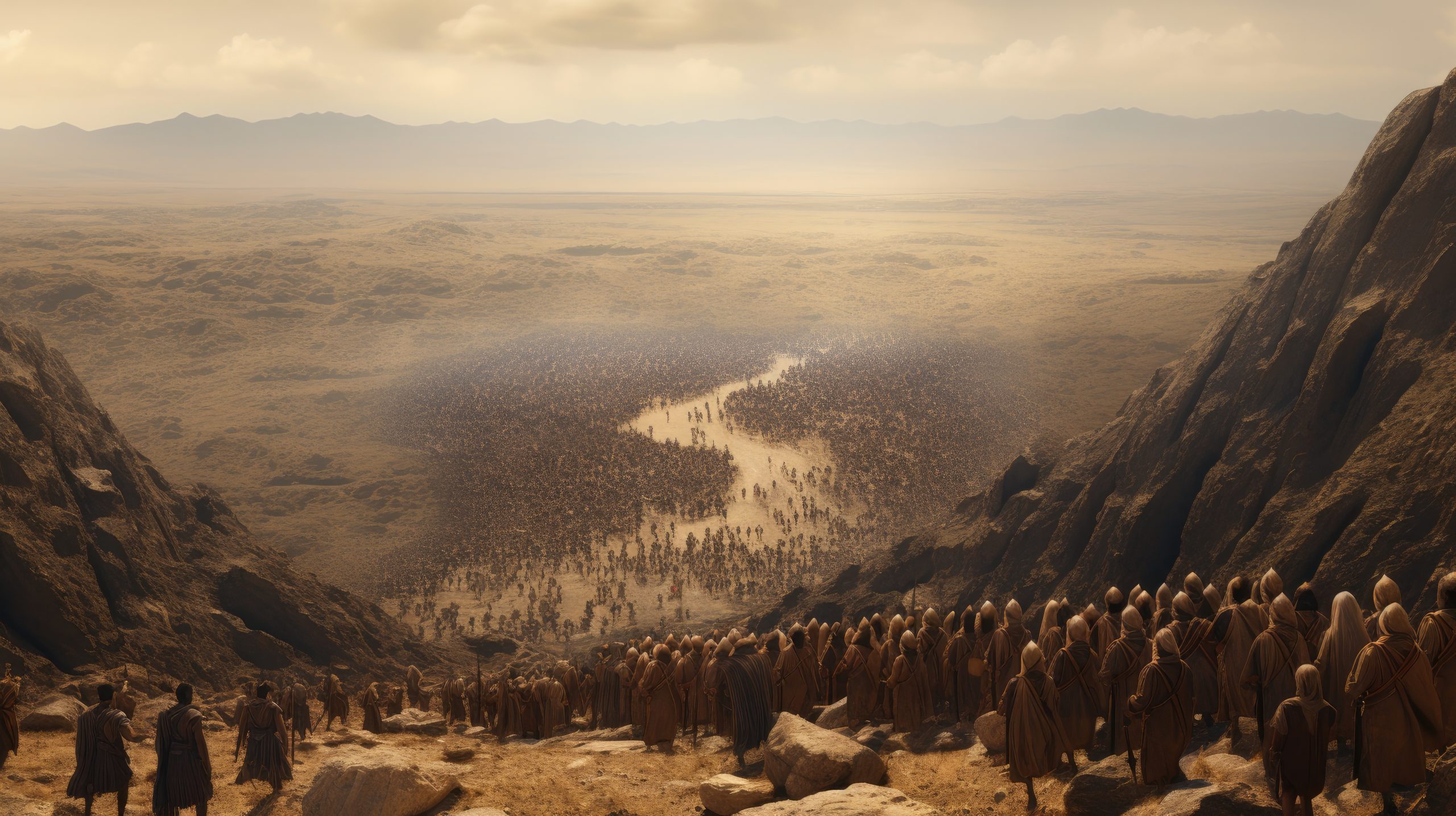
Based on the Torah commanding us to, “Remember this day on which you departed from Egypt… for with a strong hand Hashem removed you from there… [Shemos 13:5], our Sages concluded that we are commanded to feel as though we personally were redeemed from Mitzrayim, “And He took us [personally] out from there.” [Devorim 6:23] The question Rabbi Leff and many others ask is how can we, today, observe this mitzvah that seems extremely difficult if not impossible? But Rabbi Druck points out an anomaly, as the Haggadah says, “In every generation it is one’s duty to regard himself as though he personally has gone out of Egypt.”
The Matnat Chayim notes that our redemption from Egypt is actually one event we are required to remember daily. He cites the second paragraph of out Grace after Meals as a way of fulfilling this obligation of seeing ourselves as being personally redeemed. We thank Hashem “for the good Land… and that You have taken us out [and continue to take us out] of Mitzrayim.” The verb our liturgy uses is hotzesanu/continuously taking us out, not hotzi’enu/took us out in the past tense. The Seder is meant to provide us with the experience and the faith that will form the wellspring for memory to carry us throughout the year.
Why is it so important to personally feel the experience/ The Shvilei Pinchas suggests that by putting ourselves in that experience, by understanding that had Hashem not have redeemed our ancestors, we ourselves would indeed still be slaves in Egypt, as the Haggadah itself states, that realization will lead us to a greater sense of gratitude to Hakodosh Boruch Hu.
But actually, continues the Shvilei Pinchas, we were there. Just as all Jewish souls were present when Hashem gave us the Torah at Sinai, all Jewish souls were enslaved in Egypt. Each soul is part of the greater Knesset Yisroel that spans eternity, past. present and future. Each soul was incorporated into the original seventy souls that descended to Mitzrayim. Our soul is above time and place.
But that freedom goes beyond physical emancipation. When Hashem took us out of Egypt, He removed from our souls forever the slave mentality, the freedom often deeply hidden within the Jewish psyche, teaches the Maharal. It is this fierce independence that emerges when a Jew defies our subjugators, insists on remaining a Jew even on pain of death; when the Jews in a concentration camp hoard threads and drops of oil to light a Chanukah candle. This is the message the Haggadah delivers when we read that every generation must see itself as if he personally left Egypt. Each of us inherited that independent mindset as part of our national DNA, writes Rabbi Schwab zt”l. That Jewish spirit comes from our being taken out of Egypt and can never be broken, explains Rabbi Rothberg in Moda Labinah, no matter which nation in whatever generation tries to subjugate us.
As part of our covenantal relationship with Hakodosh Boruch Hu, Hashem has bestowed upon us this eternal freedom, writes Rabbi Mintzberg zt”l in Ben Melech. It is a manifestation of His love for us. Even in exile, we remain His children, and His watchful eye is upon us, adds Rabbi Druck. In return, writes the Sifsei Chaim, our obligation is to try to imagine the experience. Close your eyes. Focus on the details, the feelings, the thoughts as if you were really there. Make it alive. “Vechol hamarbeh…/ All who tells more…” refers not only to speaking, but also to creating the experience, explains Rabbi Salomon zt”l, and the specific mitzvoth of the Seder, the matzah and maror, are there to enable the experience. That’s why we end the Seder with saying we’ve concluded the Seder according to all its mitzvoth and laws. As Rabbi Gladstein writes, citing the Abarbanel, at the beginning of the Seder, the matzah is a symbol of enslavement, but by the end of the Seder, the matzah has been transformed into a symbol of our freedom and redemption.
The essence of the Seder is to instill in us strong emunah/faith that will carry us through the entire year, writes Rabbi Scherr zt”l in Lekach Sichot Mussar. Imagine in your soul each step in the process of redemption. Imagine listening to Moshe’s words. Witness each plague, how it affected the Egyptians but not you and your fellow Jews. That was Hashem’s special relationship with you. How did you feel eating the Pesach sacrifice behind closed doors? And then you left and followed Hashem wherever He led you, without supplies, with just some unbaked dough for food. Try to internalize that complete reliance on Hakodosh Boruch Hu as you eat the matzah. We felt His presence as He Himself, not an angel, passed over our houses and killed the Egyptian firstborn. We are meant to take that feeling of Hashem’s love for us with us into every challenge, in every generation, writes Rabbi Beyfus in Yalkut Lekach Tov.
Remembering Mitzrayim is more than our experience. It is meant to instill in us a sense of mission, suggests Rabbi Mansour, the mission of connecting heaven and earth, of bringing Hashem’s presence to earth. When Hashem created the universe, he formed heaven and earth, paired. Then Day two was paired with Day four, and Day three with Day six, culminated in the creation of Adam, a composite of the heavenly soul with the bodily earth. This was Mankind’s mission.
Pharaoh thought otherwise. He refused to recognize God. The entire reason for the exodus was for Bnei Yisroel to accept the Torah and thereby to reconnect Heaven and earth. In fact, the ten plagues parallel the ten utterances with which Hashem created the world, and with which they would be reconnected with the Ten Commandments at Sinai. This is what we are to remember at the Seder and what we are to carry away from the Seder for the entire year.
Mitzrayim represents the narrow, superficial mind, unwilling or unable to grasp the invigorating energy of connection with Hakodosh Boruch Hu. It is a mind that is encased in the present, seeing nature as the only reality, writes Rabbi Morgenstern in Beyam Darkecha. Bnei Yisroel were enslaved in this same mindset. Then Hashem Himself came down and smote the Egyptians. Hashem killed the Egyptian firstborn and declared Bnei Yisroel as His firstborn. Bnei Yisroel broke through the shell of the Egyptian mindset, and clarity returned. We made Hashem our Master and King of the world.
The Seder reminds us of our commitment to constantly connect heaven and earth, to see Hashem in every aspect of the world, to bring glory to His Name. We are the ambassadors of the King.
In an essay called The Freedom Time Zone, Rabbi Leff makes a profound observation. He points out the difference between Eretz Mitzrayim, The Land of Mitzrayim/Confinement and Mitzrayim, the mindset of narrowness and confinement. At the Seder, we must see ourselves as having been redeemed not from Eretz Mitzrayim, but from Mitzrayim, from our own personal confinement and enslavement, to our personal challenges, to our yetzer horo.
It is within this context that Rabbi Reuven Feinstein urges us to contemplate the meaning of true freedom. It is not so much the freedom to enjoy leisurely activities and cultural surroundings, for those are often enslaving ourselves to society. True freedom is having complete faith in Hakodosh Boruch Hu, as our ancestors did as they left Egypt. True freedom is the freedom to pursue one’s goals and ideals, even when they conflict with those of society. Those challenges to our freedom exist in every generation. When we left the Land of Mitzrayim, we also left behind the culture of Mitzrayim, and we were free to follow Hashem. In our generation, we are called upon to break out of the negative influences of our society, whether technological, physical or social. While these can all be used positively, we are called upon to use the gifts we are given in service to Hashem, not in the false “freedoms” society dictates.
Sometimes people don’t want to leave Egypt because they don’t realize they are being constrained, writes Rabbi Schorr. The Haggadah is telling us to see yourself as if you were personally enslaved, check your own reality. Identify what is holding you back. Are society’s platitudes concealing truths, like the peh rach, the soft arguments that Egypt used to trap us until we were totally enslave? No slave ever left Egypt because they had been convinced that this place and this life was the best that could ever be; they didn’t want to leave.
Today we are enslaved by the desire for money, our jobs, and other values of this world. We don’t realize our “enslavement” to the latest trend. [Every week we are bombarded with soft voices and new lists of “must haves.” Do we really need them? CKS] Before we can get free, we need to realize what is our Mitzrayim, how we are limiting ourselves. As the Nesivos Shalom says, we can change our identity and throw off the shackles that constrain us. We need not be defined by our negative emotions, by financial conditions, even by physical challenges. When we tap into our inner reserves, we also tap into Hashem’s blessings. Using our freedom to connect with Hashem opens the gates of Hashem’s storehouse of blessings and releases them to us.
Rabbi Schorr, citing Rav Aharon of Sadigura zt”l, gives complete clarity to our vision on this night. Each of us must feel not only that I was personally redeemed, but that the entire exodus was orchestrated for my personal benefit, bishvili nivra haolan, after all, the entire world was created for me. How grateful must I be for this great chesed Hashem has done for me! This night must inspire me to desire to be an eved Hashem, Hashem’s servant, all year long.
Download PDF