Participants from across diverse hashkafic backgrounds came together for chizuk, networking, and practical guidance rooted in a shared mission of chesed shel emes
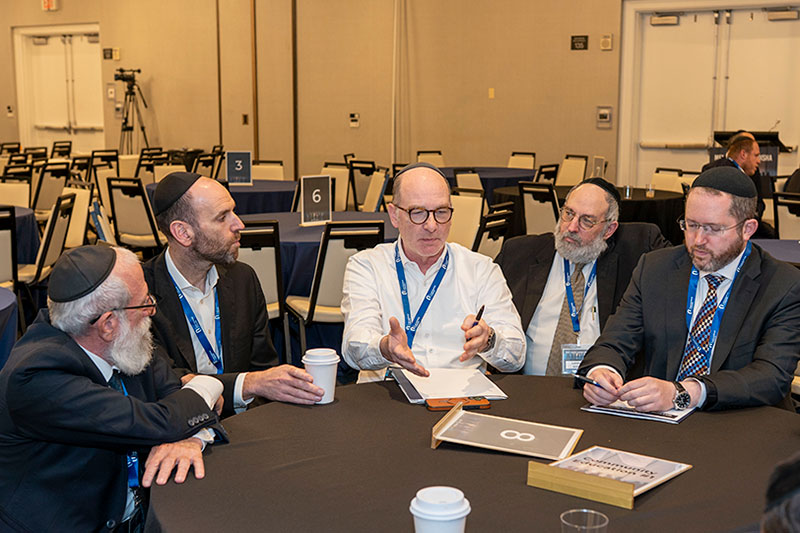
The sacred work of Chevros Kadisha is among the most humble and quietly performed mitzvos – carried out by individuals for whom this final act of kindness is its own reward. Recently, however, more than 100 men devoted to this ultimate chesed shel emes stepped out from behind the scenes and joined together for chizuk, networking, and practical guidance at the Men’s Chevra Kadisha Leadership Conference.
Hosted by the Orthodox Union and NASCK (National Association of Chevra Kadisha), the conference brought together administrators and active tahara leaders from more than 50 cities across 17 U.S. states, as well as Canada. Representing Chasidish, Yeshivish, Chabad, Sefardi and Modern Orthodox communities, participants were united in their avodas hakodesh.
“The people who devote the most time and energy to serve Klal Yisrael often go unrecognized, by choice,” says OU Director of Torah and Halacha Initiatives Rabbi Ezra Sarna, who organized the conference together with NASCK Director of Chevra Relations Rabbi Shmuel Fromowitz. “They do their chesed quietly. Yet to be in a room with others who understand their expertise and who are similarly carrying Klal Yisrael on their shoulders gives them strength. The exchange of knowledge and experience, along with the relationships formed, significantly enhances their work and service.”
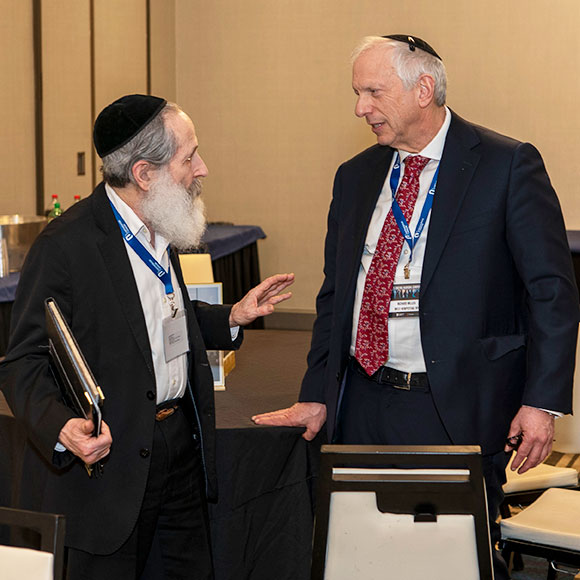
Rabbi Elchonon Zohn is a world-renowned halachic expert in afterlife care, the director of the Chevra Kadisha, Vaad Harabonim of Queens, New York, and the founder and president of NASCK, which he launched over 25 years ago as a resource for Chevros Kadisha. NASCK offers education and practical guidance on a broad range of issues relating to kovod hameis with a special focus on tahara and the broader role the Chevra Kadisha plays in its communal work.
Rabbi Zohn reflects that the sense of achdus cultivated by the diverse community representatives was truly inspirational. “From smaller communities in Seattle and San Francisco to the major Torah centers of Brooklyn, Monsey, and Lakewood, the energy and synergy were palpable,” he says. “Everyone was engaged — learning, growing, sharing, and united by a common sense of purpose, mission, and the goal to emulate Hashem and His chesed shel emes, as defined by His Toras emes.”
In his keynote address, Rabbi Zohn recognized the overwhelming power and collective impact of the chesed represented at the conference, and underscored the basic precepts of chesed shel emes: to treat each tahara as a singular moment of loss for that specific family and neshama, to perform this selfless mitzvah in the spirit of Hashem’s boundless kindness, and to ensure that every act of chesed is guided by the halachos and minhagim passed down through generations.
Throughout the day, participants attended sessions exploring both halacha and best practices, covering topics such as rechitzah, tahara, tachrichim, and complications that arise in the tahara room.
“The tahara process is not very complicated, but it is highly detailed,” says NASCK Associate Director Rabbi Yaakov Lyons, who coordinates the men’s division of the Boca Raton Chevra Kadisha and presented at the conference. “Every step carries significance, and our goal is to ensure that each individual is treated with the utmost dignity. Modern medical interventions often introduce complexity to the tahara process, so this leadership conference focused on some of those complex scenarios.”
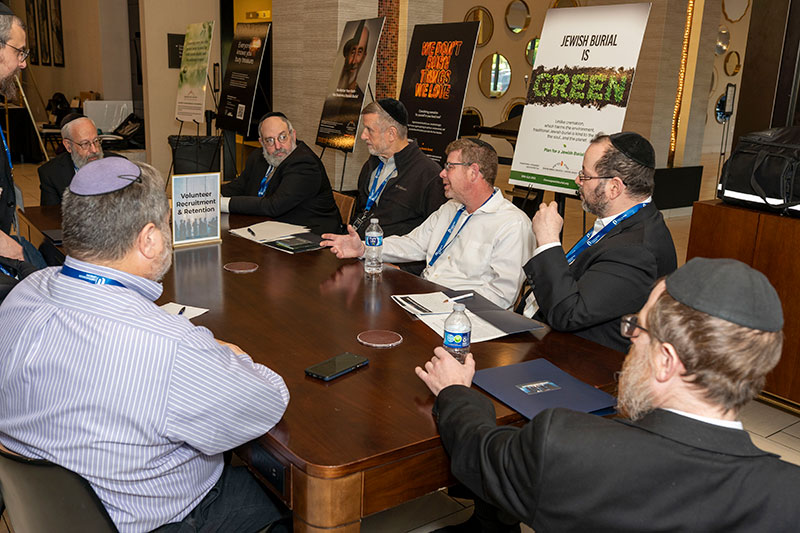
A panel discussion entitled Working with Funeral Homes offered insights into how Chevros Kadisha can cultivate positive relationships with funeral homes. Topics included how to set the tone of the partnership, how to communicate the standards of the Chevra Kadisha, and how to encourage funeral homes to promote traditional burial and tahara to the broader Jewish community.
“This is a very important topic because, in most communities, Chevros Kadisha operate independently of funeral homes yet rely heavily on them, making the relationship both essential and delicate,” says Rabbi Fromowitz. “There is also a responsibility to educate and sensitize funeral home staff to the needs of the traditional Jewish community, ensuring that families are cared for in accordance with their minhagim and values. Clear communication is critical.”
For Ari Wartelsky, who oversees the Bergen County Chevra Kadisha, the open exchange of ideas sparked by the networking sessions stood out as particularly valuable.
“While funeral home costs can be challenging, Chevros Kadisha depend on them to serve kehillos with dignity and care,” says Wartelsky, who presented on transporting the deceased in Bergen County, New Jersey. “At the same time, we must continue exploring ways to reduce the financial burden on families.”
A conference highlight was the informal networking that took place between sessions and over lunch, where participants exchanged experiences and practical approaches.
“I met a Chevra Kadisha volunteer from New York whose team carries out taharos and related protocols with remarkable care, precision, and efficiency,” says Yisroel Salamon, who oversees Chesed Shel Emes of Connecticut. “I plan to send members of my Chevra to observe how they operate so we can learn from their approach. That’s just one of the many benefits that came out of the conference.”
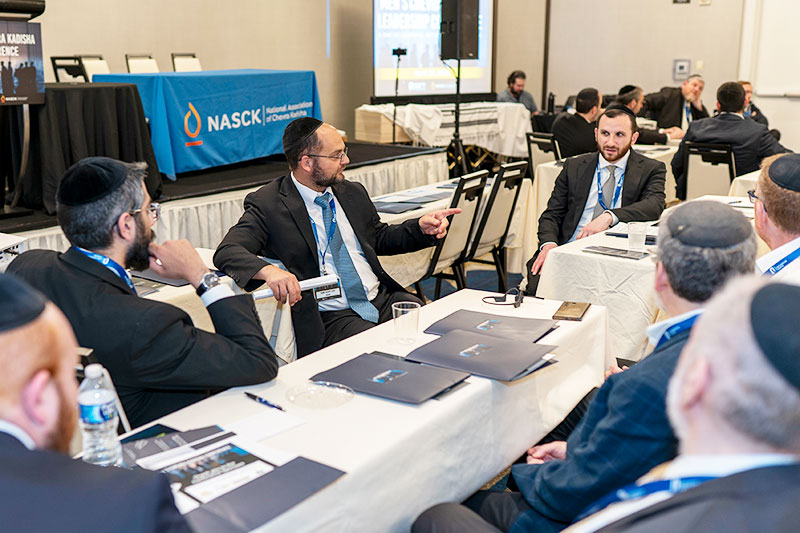
Equally meaningful were two roundtable sessions in which participants divided into small groups, each focusing on a specific area such as meis mitzvah, tahara team organization, volunteer recruitment and retention, shmira, coordination with medical examiners, community education, and cemetery relations.
“The smaller format allowed every participant to contribute as well as learn,” says Rabbi Fromowitz. “Each discussion generated thoughtful exchanges about best practices, with insights shaped by the size and dynamics of different communities. We received amazing feedback on these sessions.”
What stood out most for Salamon was how each Chevra navigates the unique regulations of its state while addressing the needs of its community.
“I moderated one of the discussions where we compared approaches in Connecticut, New Jersey, Ohio, upstate New York, Indiana, and Texas, each with its own challenges and community dynamics,” he says. “While every group brought different practical wisdom and creative solutions, the shared values, goals, and sense of purpose were the same.”
Rabbi Fromowitz reflects that partnering with the OU helped bring valuable experience and a strong understanding of communal needs to the event.
“The OU’s involvement reinforces that this is a national priority for Klal Yisrael,” he says. “Beyond that, there is tremendous value in organizations working together to strengthen and elevate communal infrastructure. We hope this marks the beginning of continued partnerships that will further support these vital efforts.”
About the Department of Halacha Initiatives
The Halacha Initiatives department strives to facilitate shmiras hamitzvos and halacha for communities and individuals. This is accomplished via the creation of innovative programs and software, halacha education, and community networks for sharing knowledge and experiences.
About the Orthodox Union
Founded in 1898, the Orthodox Union (OU), or Union of Orthodox Jewish Congregations of America, serves as the voice of American Orthodox Jewry, with over 400 congregations in its synagogue network. As the umbrella organization for American Orthodox Jewry, the OU is at the forefront of advocacy work on both state and federal levels, outreach to Jewish teens and young professionals through NCSY, Israel Free Spirit Birthright, Yachad and OU Press, among many other divisions and programs.