As the country approaches 250 years of independence, Jewish community members reflect on the pride, resilience, and unity of American Jewry
May is Jewish American Heritage Month, a time to celebrate the history, culture, and enduring impact of Jews on American life. While Jewish presence in America predates the founding of the U.S. by more than a century, this year’s observance comes just weeks before July 4, when the United States marks 250 years since the signing of the Declaration of Independence. In honor of this milestone, Jewish community members from a range of backgrounds and experiences share what gives them pride and optimism about Jewish life in America today.
For Ruth Baars of Baltimore, Maryland, Yachad’s assistant director of regions Jewish life in America is defined by possibility.
“Being Jewish in America has been a tremendous opportunity,” she says. “Innovation and independence have been part of U.S. culture since its founding, and that environment has allowed the Jewish community to flourish. Jewish ideas are a bedrock of America and Jews have benefited from that openness. That same attitude has made it possible for Jews to express their identity and to make choices that may differ from how they were raised.”
She believes that same spirit of independence has enabled many Jews to deepen their commitment to Torah and mitzvot.
Stamford, Connecticut resident Michael Feldstein, an author and vice president of marketing for an energy company, places this reality in historical context.
“Never in Jewish history have Jews experienced the level of religious freedom they have in the United States,” says Feldstein. “Where Jews once wondered whether they could live openly as Jews, in America the question has become how to live as Jews.”
Bluma Broner, a co-head of Healthcare at CIBC in Chicago, Illinois, describes the ability to fully embrace her Orthodox identity without compromise. Whether observing Shabbat, keeping kosher, or dressing modestly, she has found American society to be remarkably accepting.
“Merit and quality of work are valued above background or appearance,” she notes. “The freedom to practice Judaism without fear or restriction is a profound blessing, and the sense of brotherhood among Jews, despite being a small minority, is immediate and powerful. The opportunity to connect with Jews from all backgrounds, and focus on what unites us rather than what divides us, is a testament to the inclusive spirit of Jewish life in America.”
For Brandon Melamed, an OU Executive Fellow in New York, that same freedom translates into pride.
“I can happily wear my kippah, daven in airports, and not feel afraid to visibly show that I am Jewish,” he says. “I know that as a Jew, I have the same opportunities as other people and can make whatever I want out of my life here in America, regardless of religious or economic background.”
New Yorker Avigayil Silberman, who also works as an OU Executive Fellow, points to the strength and vibrancy of Jewish life across the country.
“We’ve built a thriving, beautiful community from scratch in a relatively short time,” she says, noting the community’s impact across industries, organizations, and networks. What stands out most to her is the resilience and tenacity that continue to drive that growth.
Feldstein sees similar strength in the world of Jewish education.
“There has been an explosion of Jewish learning and cultural opportunities at every level, from day schools and yeshivot to adult education and online learning,” he says. “We are living through a golden age of Jewish learning — something our ancestors could barely have imagined.”
International Torah educator Michal Horowitz, of Woodmere, New York, sees that growth firsthand. Through her in-person and online teaching, she encounters Jews across the country eager to engage deeply with Torah.
Horowitz marvels at the many educational opportunities that allow college students to learn in a Jewish environment, from Touro University and Yeshiva University to smaller programs.
“These resources provide a strong, well-rounded education in a safe, comfortable, and supportive setting,” she says. “Additionally, the many school options for children — from special education, to Zionist Modern Orthodox day schools, to formal Yeshiva settings — reflect how strong Torah education in America has become. We can already see the next generations carrying forward our beautiful mesorah.”
Horowitz also points to the strength of communities built around the shul.
“A wonderful aspect of Torah communities in America is their strong communal structure, centered around the shul kehilla,” says Horowitz. “This presents the opportunity to strengthen friendships, engage in chesed, find religious inspiration, share in smachot, build connections with the rabbanim and rebbetzins, and experience warm and authentic camaraderie. Organizations including Tomchei Shabbos, Hatzalah, the OU, ATIME, and Bonei Olam – to name but a few – are sources of pride and joy, reflecting the centrality of chesed in Jewish life (Yoma 79a), a middah in which American Jewry excels.”
Another source of pride, many say, is the strong sense of community and patriotism expressed both at home and in connection with Israel.
Broner describes a powerful feeling of achdut in her community, where families of different educational and religious backgrounds come together with mutual respect and support.
“We may hold different views,” she says, “but we always find common ground as members of Am Yisrael. This spirit of togetherness is a beautiful aspect of American Jewish life.”
“At the same time,” adds Feldstein, “American Jews enjoy deep and open connections to Israel and global Jewry.”
Horowitz agrees.
“American Torah observant Jews are generally patriotic, law-abiding, and deeply appreciative of the religious freedoms we are blessed with, by the grace of G-d,” she says. “We are also deeply connected to Israel, committed to her well-being, travel there as often as possible, daven for the land and her citizens, love the IDF, and hope to one day live there.”
Embracing the future, Baars believes the same independence and innovation that define American life also create a drive to give back and strengthen Jewish continuity.
“Since October 7,” she says, “that sense of responsibility has deepened, particularly among Jews who have been less involved in the community. Seeing the atrocities in Israel, the antisemitism in their hometowns, and the bravery and resilience of the Jewish people has awakened their communal love and connection, and empowered them to speak up and live more openly Jewish lives.”
Feldstein echoes that optimism. While acknowledging ongoing challenges, he emphasizes that they do not define the community. What stands out instead, is the strength of communal institutions, advocacy organizations, and the collective support system that sustains Jewish life.
“We are not just preserving what we inherited,” he says. “We are actively shaping what comes next. In America, Jewish history is something we continue to build, giving this generation both opportunity and responsibility to shape a vibrant Jewish future.”
That forward-looking mindset is especially evident in efforts to engage the next generation. Silberman, through her work with NCSY, focuses on reaching the hundreds of thousands of Jewish teens who are not yet connected to Jewish life.
“NCSY is working strategically and persistently to reach them and expose them to the community that rightfully belongs to them,” she says.
For Melamed, optimism is rooted in personal history.
“Watching my parents and grandparents build successful, observant lives in America — often facing greater challenges than I do — gives me confidence in the future,” he says. “I hope to provide that same strength for generations to come, so they too can be successful without compromising religious observance.”
Horowitz shares that positive outlook, grounded in what she sees every day: growing communities, deepening commitment to Torah and mitzvot, and a continued dedication to helping one another and supporting Israel.
Even while acknowledging uncertainty and the need for vigilance, Broner remains encouraged.
“While polling and current events can be concerning, I find hope in the clarity and integrity of many individuals, both Jewish and non-Jewish, who see and speak the truth,” she says. “Despite the difficulties, the resilience, unity, and commitment of our community give me confidence that Jewish life in America will continue to thrive.”
About the Contributors
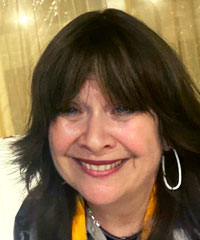 Ruth Baars is a longtime nonprofit leader, facilitator, and Jewish educator. Now Yachad’s assistant director of regions, Ruth guided strategic vision, launched innovative initiatives, and built collaborative teams as director of programs and chief operating officer for 15 years at Momentum. She previously co-directed the Aish Center of Greater Washington with her husband, Rabbi Stephen Baars, teaching and mentoring hundreds of families. She lives in Baltimore, Maryland, with her husband, seven adult children, and grandchildren.
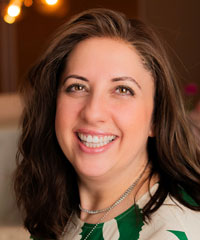 Bluma Broner of Chicago, Illinois, is a proud wife, mother of four, and grandmother of nine. After a decade of living in Israel post-high-school, Bluma returned to Chicago where she began a career rooted in commercial banking. Today, she serves as co-head of Healthcare at CIBC. Deeply involved in the Jewish community, she participates in her local chevra kadisha, and serves on the boards of the OU, Jewish United Fund (JUF), and the Chicago chapter of the Jewish Women Entrepreneurs (JWE).
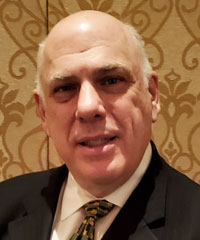 Having grown up in West Hempstead, New York, and Teaneck, New Jersey, Michael Feldstein lives in Stamford, Connecticut with his wife, Sharon. A proud father of two and grandfather of three, he has spent his career in direct marketing and currently serves as vice president of marketing for an energy company. Michael has played a central role in Stamford’s Jewish community, including heading the rabbinic search committee for Young Israel of Stamford, chairing the local eruv committee, and serving for many years on the board of his chevra kadisha. In his role spearheading the OU’s Savitsky Communal Growth Initiative in Stamford and serving as a community representative for the biennial Savitsky Home Relocation Fair, Michael has helped bring more than 100 young families to the community over the past decade. The author of Meet Me in the Middle: Collected Essays on Contemporary Jewish Life, Michael writes a weekly column for The Jewish Link and blogs for the Times of Israel.
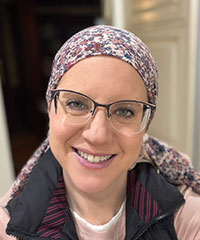 Toronto-born Michal Horowitz holds a Bachelor’s in Speech and Hearing and a Master’s in Audiology, but after delivering her first shiur in 2010, she became an educator and never looked back. A proud wife and mother, Michal resides in Woodmere, New York, and maintains a strong connection to Israel, where she frequently visits, teaches, and has family. She lectures in schools, shuls, and communities, and teaches for major Jewish organizations, including the OU, Ohel Family Services, and Olami, and has served as a scholar-in-residence nationally and internationally. Michal is passionate about sharing the depth, beauty, and relevance of Torah with diverse audiences, many of whom become dear friends. Her recently released book, Abled: Living With a Disability, a Torah View (December 2025, Mosaica Press), draws on her personal experience of living with severe bilateral hearing loss and her years of Torah teaching.
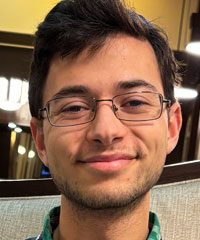 OU Executive Fellow Brandon Melamed, a Jacksonville, Florida native who now lives in New York City, works in the Department of Synagogue Initiatives. Outside of work, Brandon’s communal involvement has included several years as an NCSY advisor in Northern California, serving in a Jewish men’s special needs home, and leading the YU Seforim Sale as CEO during his senior year at Yeshiva University in 2025.
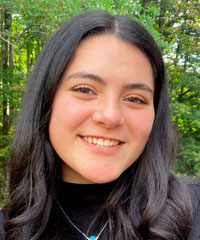 Avigayil Silberman of Long Island, New York, serves as an OU Executive Fellow in NCSY’s development department. Avigayil has previously participated in Olami programming, and served as madricha at Neve Yerushalayim. She looks forward to becoming the director of Student Leadership and Initiatives for NCSY’s JSU (Jewish Student Union) starting this July.