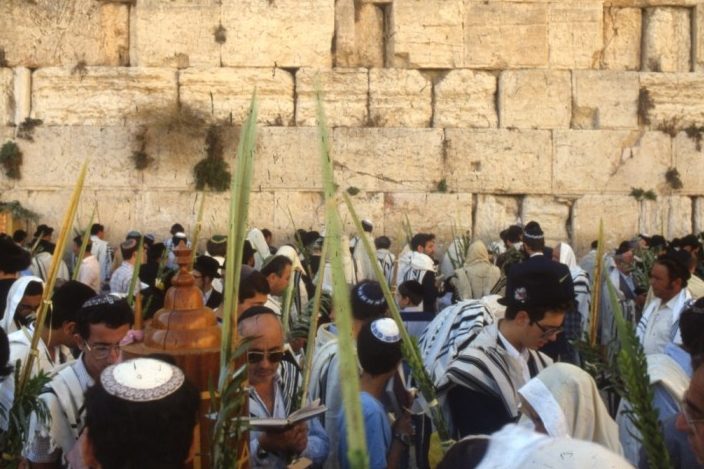
Sukkot is a holiday rich in tradition and meaning. From the holding of the Lulav and etrog to the sitting in a Sukkah, the holiday is filled with symbolism to express our relationship to G-d.
Sukkot comes just five short days following Yom Kippur. The timing is not accidental. Only after we have reached a new level of purity and atonement on Yom Kippur, can we then be truly joyous on Sukkot. Indeed, there is a special Mitzvah of Simcha, happiness, on Sukkot.
Sukkot commemorates how protective “Clouds of Glory” surrounded the Jewish people after leaving Egypt during the forty years of wandering in the desert. It also commemorates how the Jews lived in temporary dwellings during that same time. So too we leave the safety and security of our houses and put ourselves under the direct protection of G-d Almighty. His protection, in the final analysis, is the only one that matters
In Sukkot you shall dwell seven days, every citizen in Israel they shall dwell in Sukkot, in order that your generations shall know, that in Sukkot did I cause the children of Israel to dwell, when I brought them forth from the land of Egypt.. (Leviticus Chapter 23)
The Mitzvah of Sukkah
Eating meals, sleeping and spending time in the Sukkah is a unique religious experience. Some have the custom of decorating the Sukkah with fancy decorations such as fruits or New Year’s cards while others prefer to preserve its unadorned simplicity.
The Sukkah is the only Mitzvah in which we are completely surrounded by the Mitzvah itself; enveloped, as it were, in the divine presence.
The Mitzvah of Lulav and Etrog
The other well-known mitzvah which pertains to Sukkot is the mitzvah of taking a lulav and etrog. There are actually 4 elements involved in this mitzvah and all must be present to properly fulfill it. The four elements are etrog, lulav, (palm branch), hadas (avot tree branch), aravah (willows of the brook). A bracha is said on the four species every day of Sukkot.
A Time of Hope For Universal Peace:
When the Jewish people rejoice on Sukkot, our hearts go out to the whole entire world. That means that ultimately, when G-d brings peace to the earth it will be for all mankind. In those days of the when the Holy Temple stood in Jerusalem, the Sukkot Festival offerings included seventy oxen, corresponding to the seventy nations, in prayer for peace and harmony among all the nations of the world.
Other mitzvot on Sukkot include the libation of water on the altar (in Temple Times), the beating of the Aravah on Hoshana Rabah; and a specific mitzvah to rejoice.