Testers and advocates from across the country convened for chizuk, professional networking, and discussions on emerging issues and industry developments
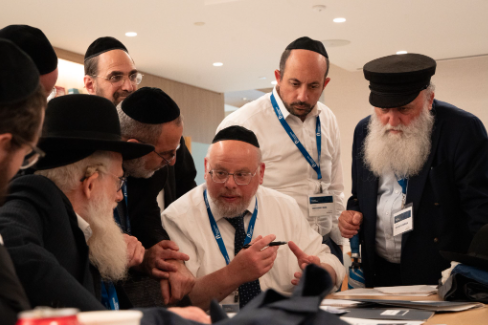
It’s a process most people barely think about when dropping off suits, sweaters, coats, or even tablecloths at a shatnez laboratory. Yet for the approximately 150 shatnez testers in the U.S. who inspect materials for mixtures of wool and linen, it is painstaking, meticulous work requiring extensive training, experience, and unwavering attention to detail.
It’s a craft that Rabbi Yosef Sayagh knows inside out. A world-renowned expert on the laws of shatnez, he has spent nearly 36 years in the field and trained approximately 250 testers to identify wool and linen under microscopes using specialized techniques, while performing inspections without damaging garments.
The director of the International Association of Professional Shatnez Labs (IAPSL), Rabbi Sayagh was among the presenters at the Orthodox Union’s recent National Shatnez Conference at OU headquarters in New York, which drew 55 shatnez testers and askanim (advocates) from Florida, Illinois, Maryland, New Jersey, New York, Ohio, Pennsylvania, and Virginia.
“I want consumers to know how thoroughly testers check,” he says. “In a man’s suit, for example, we inspect approximately 35 places. Additionally, testing procedures are complex and time-consuming, particularly when examining tweed fabrics that require inspection of every single color.”
Following its recent City Eruv and Chevra Kadisha Leadership conferences, the OU’s National Shatnez Conference continued a broader initiative to support professionals whose highly specialized work is essential to Jewish communal life but is often performed in relative isolation. Through chizuk, networking, and discussions of emerging issues and complex halachot, the conferences help strengthen those who dedicate themselves to serving Klal Yisrael.
“Shatnez is a unique type of prohibition, and the poskim treat shatnez with unique stringency,” says OU Director of Torah and Halacha Initiatives Rabbi Sarna, the conference organizer. “If a person mistakenly buys a piece of non-kosher meat and eats it, it’s a terrible thing, but it is an isolated experience. Every moment you are wearing shatnez is an additional aveira. Every community relies on shatnez testers and askanim. The conference’s core goal was to be mechazeik their yiras shamayim and expertise. Beyond that, my hope is that bringing together leaders in the industry will foster greater collaboration and new ideas that will enable clothing companies to obtain ‘shatnez-free’ certification.”
The program combined practical guidance with broader discussions about the future of the profession. Sessions explored common shaylot and teshuvot; the challenges inherent in garment factories and how shatnez may be unknowingly incorporated into garments; advancements in shatnez testing over the years, new resources for testers; and the responsibility of the tester.
The gathering served as the launching ground for shatnezlist.com, a searchable tool for testers and consumers designed by Rabbi Sarna, which identifies clothing and other items found to contain shatnez according to brand.
Other event highlights included inspiring words from OU Kosher Chief Executive Officer Rabbi Moshe Elefant, who offered chizuk to the testers and advocates who are serving Klal Yisrael.
Among the recurring themes was the need for greater consistency across the industry. Rabbi Sayagh called for testers to adopt unified standards and policies, noting that questions frequently arise regarding whether certain items require inspection.
“These items include polyester and viscose men’s jackets, inexpensive suits, sweaters that contain only five percent wool, 100 percent linen shirts, and recycled materials, among many others,” he explains. “I emphasized that all shatnez laboratories should operate according to the same guidelines and provide the same guidance to consumers.”
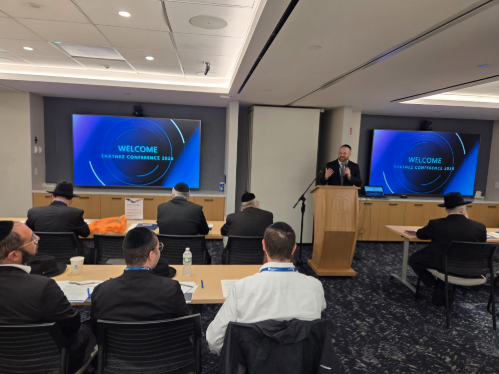
Another key takeaway was the importance of staying current. Rabbi Sayagh underscored the importance of staying up to date with colleagues on developments in the field, including new fibers and new places to check for shatnez inside garments.
“In the past, for example, baseball gloves were made with recycled materials, then they were not, and now they often are. Some are permissible, some are not. Testers must be up to date with the current standards,” he says. “That is why bringing the industry together is so important. When everyone is operating from the same knowledge base, consumers can have greater confidence in the results.”
The conference also gave participants a rare behind-the-scenes look at how garments are manufactured. OU Kosher Rabbinic Coordinator Rabbi Daniel Sharratt shared findings from his observations of textile manufacturers at work.
“Having an understanding of what actually takes place on the factory floor during textile manufacturing really brings to light the issues and pitfalls surrounding the prohibition of shatnez,” he says. “It’s a privilege to share these insights with shatnez testers, who help protect Klal Yisrael from violating this prohibition, so that they can gain a better understanding of the textile industry as a whole.”
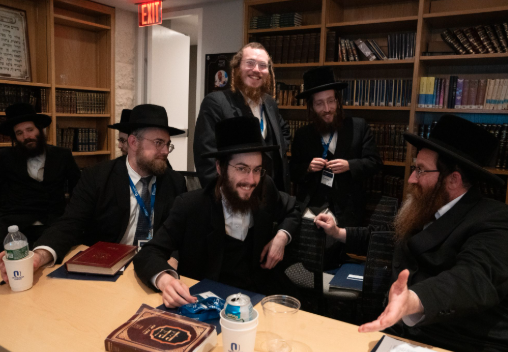
Other presenters included IAPSL Founder Rabbi Yoel Schocket; Dayan and Rosh Chabura of the Greater Washington Community Kollel Rabbi Yitzhak Grossman; Rabbi Moshe Bresler of the Vaad L’Mishmeres Shatnez; and Director of Private Labels and Rabbinic Coordinator at Kof-K Kosher Supervision Rabbi Dov Chastain.
A close talmid of Rabbi Sayagh, Rabbi Chastain also serves as the shatnez tester for the Rochester, New York, community. He especially valued the opportunity to learn where shatnez has been found in new products, information that he and Rabbi Sayagh then disseminate to shatnez testers around the world.
“The conference created a great platform to network with other bodkei shatnez, learn about new developments in the shatnez landscape, and hear what other testers are finding so I know what to look out for,” says Rabbi Chastain. “It was also a tremendous source of chizuk, both from the stories and experiences that were shared and from the opportunity to discuss relevant shaylos and teshuvos. A huge yasher koach to Rabbi Sarna and the OU for organizing it.”
Rabbi Mordechai Djavaheri, a rebbe at Yeshiva University’s Isaac Breuer College of Hebraic Studies (IBC), teaches experiential areas of halacha, including shechitah, safrut, shofar, tzitzit, eruvin, mikvaot, and bedikat tola’im. As he prepares to add shatnez to his curriculum, he is among a group of YU rabbis studying with Rabbi Sayagh to become shatnez testers. The group was invited to attend the conference.
“We hope to open shatnez laboratories in Riverdale and Washington Heights to meet the strong demand for local shatnez testing among the many students, young professionals, and families in the area,” he says. “Learning shatnez not only enables me to practice, but also allows me to teach my students how real the issues of shatnez are by demonstrating the actual shatnez issues found in their own clothing.”
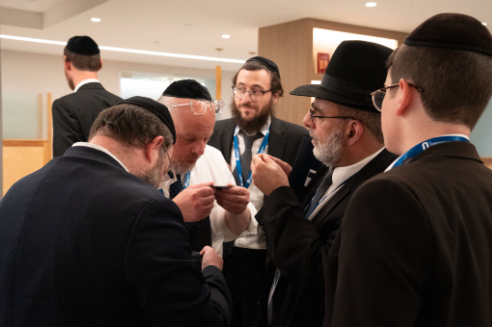
Rabbi Djavaheri was particularly struck by the participants’ shared commitment to working together for the benefit of Klal Yisrael.
“It was inspiring to see the broad range of backgrounds and ages represented among the testers in attendance. Some were meeting for the first time, while others were longtime friends, yet all were networking, collaborating, and literally feeling their way through complicated garments while discussing the techniques and science of shatnez. More than once, small groups organically clustered around a few individuals engaged in an electrifying conversation or closely examining a piece of fabric.”
About the Department of Halacha Initiatives
The Halacha Initiatives department strives to facilitate shmiras hamitzvos and halacha for communities and individuals. This is accomplished via the creation of innovative programs and software, halacha education, and community networks for sharing knowledge and experiences.
About the Orthodox Union
Founded in 1898, the Orthodox Union (OU), or Union of Orthodox Jewish Congregations of America, serves as the voice of American Orthodox Jewry, with over 400 congregations in its synagogue network. As the umbrella organization for American Orthodox Jewry, the OU is at the forefront of advocacy work on both state and federal levels, outreach to Jewish teens and young professionals through NCSY, Israel Free Spirit Birthright, Yachad and OU Press, among many other divisions and programs.