ASK OU’s Summer Kashrus Training Program Draws Participants From Across the Frum Spectrum and Around the World for an In-Depth Exploration of Kosher Certification
In Lodz, Poland, currently home to roughly 100 Jews, keeping kosher can require far more than checking for a familiar symbol on a package.
Kosher products are available, says resident Dawid Gurfinkiel, but the options are limited.
“Imported products and online shopping have made life easier, but there is still a need for greater education and availability, as well as a stronger kosher infrastructure,” says Gurfinkiel, who has worked as a mashgiach in Lodz and is involved in Jewish educational and intercultural projects. “For me, kashrus in Poland is not only a question of ‘Can I find kosher food?’ It is also a question of knowledge, trust, certification, and making Jewish religious life more accessible.”
That reality inspired Gurfinkiel to travel thousands of miles from Poland to New York to attend The ASK (Advanced Seminars in Kashrus) OU Summer 2026 Kashrus Training Program at the OU’s Manhattan headquarters.
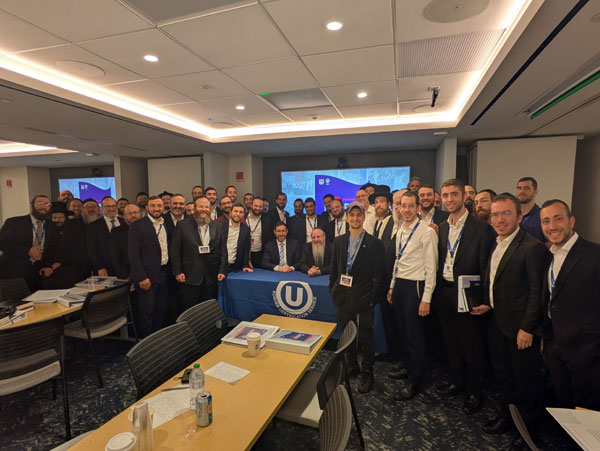
Gurfinkiel was one of 65 men representing a wide range of communities, from the Upper West Side and Teaneck to Monroe and Lakewood, with participants traveling from as far away as Poland, England, and Israel.
“OU Kosher is one of the most respected organizations in the world of kashrus,” Gurfinkiel says. “Having previously worked as a mashgiach, I was naturally interested in deepening my knowledge of modern kashrus and, hopefully, contributing to its development and accessibility in my own community.”
OU Kosher is the world’s largest and most widely recognized kosher certification agency, certifying 1.5 million products manufactured in 15,000 plants across 108 countries.
ASK OU was founded by Rabbi Yosef Grossman, z”l, OU Kosher’s former Senior Education Rabbinic Coordinator. Its Summer Kashrus Training Program, offered in alternating years for men and women, recently marked its 17th men’s cycle.
This year, 65 participants attended the one-week educational program, which provides an overview of the practical, technical, and halachic aspects of kosher certification. Twenty participants took part in the intensive three-week internship for semicha students, rabbanim, and avreichim, which examines these areas in greater depth.
At the heart of both programs is a simple philosophy, says OU Kosher Managing Director of Marketing Rabbi Eli Eleff.
“Retailer Sy Syms had a great line: ‘An educated consumer is our best customer.’ We feel the same way about kashrus. The more people know, the better equipped they are to engage in informed discussions and ask thoughtful questions, and the stronger kashrus becomes globally.”
Across approximately 60 sessions, participants explored topics as varied as bishul akum in halacha, industrial kashering, emerging food technologies, the meat field, the snack food industry, the mesorah of kosher birds, and kashrus at sea. OU Kosher CEO Rabbi Moshe Elefant discussed the latest developments in the world of kashrus, and a session on kosher in the military featured Rabbi Captain Aaron Kleinman, the U.S. Navy’s most senior active-duty Jewish chaplain. He joined remotely from the Pentagon to discuss the challenges of providing kosher food to Jewish service members.
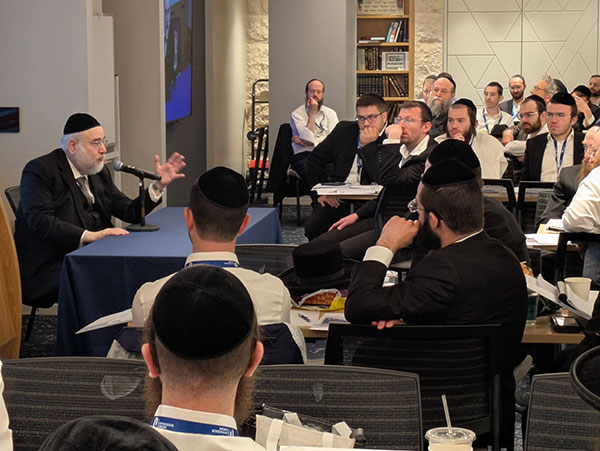
Representatives of several local vaadei kashrus also shared insights into their work. Among them were Rabbi Dovid Shapiro, kashrus coordinator of the Va’ad HaRabbanim-Rabbinical Council of Bergen County (RCBC), and Rabbi Binyomin Kreitman, kashrus administrator of Passaic-Clifton Kosher (PCK), who discussed how local kosher agencies operate and how their responsibilities and standards can differ from those of national or international certifiers.
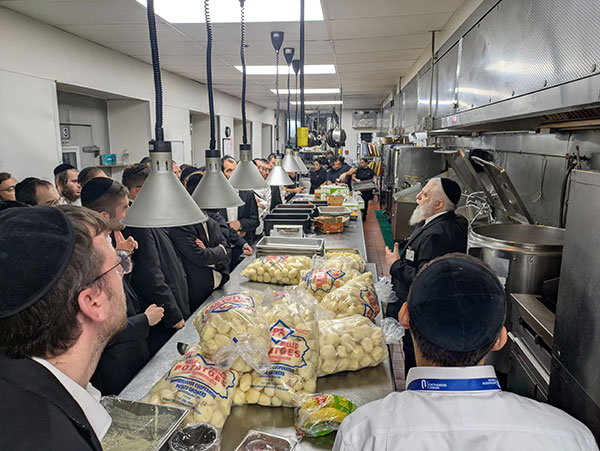
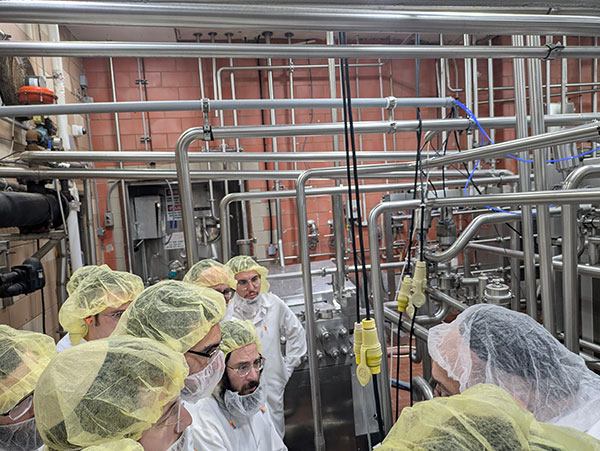
Visits to OU Kosher-certified restaurants, commercial kitchens, and processing facilities throughout the tri-state area gave participants the opportunity to see how the principles they had studied are applied in the field. Sites included David’s Cookies, Biazzo Dairy, Pelleh Poultry, Bethel Creamery, Fresh and Tasty Foods, Culinary Depot, and Alle Processing, where the Nirbater Rav, Harav Ahron Teitelbaum, Shlita, personally guided participants through the facility, teaching them about the kashering of meat and demonstrating how nikkur and shechita of large animals are performed.
For Gurfinkiel, experiences like these offered a firsthand look at the complexities of kashrus.
“The visits and demonstrations highlighted just how much knowledge, inspection, and collaboration go into a kosher symbol,” he says. “You come to realize that even an ordinary product can involve a complex certification process.”
That practical exposure was equally valuable to Rabbi Dovid Lewin, Rosh Kollel of Mosdos Ahavas Yehonoson-Beis Medrash Az Yashir in Ramat Beit Shemesh, who participated in the three-week internship.
Rabbi Lewin certifies local businesses and believes there is always more to learn, especially in the ever-evolving kashrus industry.
“Bakers and caterers I work with sometimes want to use OU Kosher-certified ingredients from America, such as sauces, spices, and oils that aren’t available here,” he reflects. “I wanted to deepen my understanding of the OU’s standards and hashgacha process firsthand so I could better explain them to Israelis who may be less familiar with the OU and the products it certifies.”
He found a visit to a massive food processor in Pennsylvania, which manufactures canned and frozen vegetables, particularly illuminating.
“Some might ask, ‘What could be wrong with canned vegetables that are edible raw?’” Rabbi Lewin says. “I knew there could be kashrus concerns, but the visit allowed me to see those issues in real time.”
Just as meaningful, he notes, was the opportunity to meet OU Kosher’s rabbinic coordinators and others working in the field.
“I appreciated meeting those who implement the halachic decisions of the OU’s poskim, as well as colleagues who work in kashrus. My fellow participants and I were very impressed by the OU’s professionalism and transparency. I would recommend the program to anyone involved in or interested in kashrus.”
For Gurfinkiel, the experience reinforced the value of building connections across the broader world of kashrus.
“The greatest lesson I took home is that kashrus is not just about checking ingredients or putting a symbol on a product,” he says. “Behind it are halachic knowledge, attention to detail, and a deep commitment to the community. Programs like ASK OU show that you can come from a small Jewish community in Poland and still learn from, contribute to, and be part of a much larger global conversation about kashrus.”
That conversation may soon extend further, with OU Kosher currently exploring opportunities to bring ASK OU programming to South America, Europe, and Israel.
“Our participants truly reflected the wonderful tapestry of Orthodox communities around the world,” says Rabbi Eleff. “Food may bring people together, but kashrus unites Klal Yisrael.”
To bring ASK OU to your community, contact OU Kosher Community Relations at 212-613-0602 or koshereducation@ou.org
About OU Kosher
OU Kosher is the world’s largest and most widely recognized international kosher certification agency, certifying 1.5 million products produced in more than 15,000 plants located in 108 countries around the world. The agency certifies two-thirds of all kosher-certified foods in the United States.
About the Orthodox Union
Founded in 1898, the Orthodox Union (OU), or Union of Orthodox Jewish Congregations of America, serves as the voice of American Orthodox Jewry, with over 400 congregations in its synagogue network. As the umbrella organization for American Orthodox Jewry, the OU is at the forefront of advocacy work on both state and federal levels, outreach to Jewish teens and young professionals through NCSY, Israel Free Spirit Birthright, Yachad and OU Press, among many other divisions and programs.