

 by Staff Writer
Sarah stared at her phone for ten minutes before responding to a text. Not because she was busy. Not because she didn’t appreciate the message. She simply didn’t have the emotional energy to answer.
Across town, David sat in his car outside Bais Din, preparing himself for another difficult hearing. Meanwhile, Rachel declined yet another Shabbat invitation. She wanted to go, but the thought of answering questions and sitting alone among couples felt overwhelming.
Divorce is more than a legal process. It can shake a person’s sense of stability, identity, family, and community. For friends and relatives, it can be difficult to know how to help. The good news is that support rarely requires profound wisdom. More often, it requires consistency, sensitivity, and a willingness to simply be there.
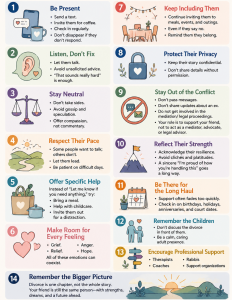
The most meaningful support is often remarkably ordinary: a text message, a cup of coffee, a walk around the neighborhood, or an invitation to join you for a meal. Even if they don’t always respond, knowing someone continues to reach out can be a tremendous source of comfort.
Just as important is the ability to listen. Divorce often leaves people feeling unheard. Resist the urge to immediately offer solutions or explanations. Sometimes the most supportive response is simply, “That sounds really hard.”
Avoid taking sides or becoming involved in the conflict. Divorce stories are complicated, and your role is not to be a judge or investigator. Offer compassion rather than commentary and respect your friend’s pace. Some days they may want to talk for hours; other days they may want to discuss anything except the divorce.
When offering help, be specific. Rather than saying, “Let me know if you need anything,” offer to bring dinner, help with childcare, or meet for coffee after a difficult court date. Small acts of practical support can make a significant difference.
One of the hidden challenges of divorce is isolation. After a few declined invitations, people often stop asking. Keep inviting them to Shabbat meals, community events, and social gatherings. The invitation itself sends an important message: You still belong.
Protect their privacy and stay out of the conflict. Don’t pass along updates about an ex-spouse, and don’t involve yourself in legal or mediation matters. Even well-intentioned involvement can reopen wounds or complicate an already difficult situation.
As time passes, continue checking in. The support often floods in at the beginning and then fades. Yet birthdays, anniversaries, Yom Tovim, and court dates can remain painful long after others assume the crisis has passed.
Don’t forget the children. They may not understand everything that is happening, but they feel its effects. A warm smile, a welcoming seat in shul, or a caring adult presence can provide valuable stability during a turbulent time.
Most importantly, remember the bigger picture. Divorce is one chapter, not the entire story. The person sitting across from you is still the same person with strengths, dreams, talents, and a future ahead. Sometimes one of the greatest gifts you can offer is helping them remember that.