

by Rabbi Elan Segelman
In many Jewish communities today, much attention has been given to the ongoing “shidduch crisis” and the growing number of single women navigating their twenties, thirties, and forties while still searching for the right person with whom to build a home. Behind this broader communal conversation lies another quieter and deeply personal reality: fertility. Many women find themselves carrying not only the emotional challenge of prolonged singlehood, but also the awareness that the years of optimal fertility continue to pass regardless of where they are in life.
At the same time, these women are not “putting life on hold.” They are building careers, contributing to their communities, supporting family members, pursuing personal growth, and continuing to search thoughtfully and sincerely for the right relationship. Egg freezing has therefore emerged within the Jewish community not as a rejection of marriage or family, but as an attempt to preserve future possibilities while life continues unfolding. Increasingly, rabbanim, physicians, and fertility organizations recognize that this conversation is not simply medical. It touches biology, halacha, emotional well-being, and questions of emunah and bitachon in profound ways.
Understanding the biological reality is an important part of the conversation. Women are born with all the eggs they will ever have, and over time, both the quantity and quality of those eggs naturally decline. While every woman’s fertility journey is unique, age remains one of the most significant factors affecting fertility potential. Fertility generally begins to decline more noticeably in the mid-to-late thirties and continues thereafter. It is therefore advisable for women in their early 30’s to explore egg freezing.
Egg freezing, also known as oocyte cryopreservation, allows a woman to preserve younger, healthier eggs for potential future use. The process generally begins with approximately ten to twelve days of hormonal injections designed to stimulate the ovaries to mature multiple eggs simultaneously. During this period, the patient undergoes close monitoring through bloodwork and ultrasound imaging so her fertility specialist can carefully track hormone levels and follicle development. Once the eggs reach maturity, the woman undergoes a brief outpatient retrieval procedure under sedation, during which the eggs are collected and frozen for future use.
Modern freezing technology has advanced dramatically over the past decade, significantly improving the reliability and success of egg preservation. While egg freezing can never guarantee a future pregnancy, it can meaningfully preserve reproductive potential, particularly when eggs are frozen at younger ages. For many women, egg freezing provides something deeply valuable emotionally: a sense of time and possibility. It allows them to continue pursuing the right relationship thoughtfully and patiently, without feeling that each passing year necessarily closes another opportunity for building the family they hope for.
Alongside the medical considerations, egg freezing also presents important halachic questions, particularly regarding Shabbos. Because fertility treatment operates according to the body’s biological timing, injections, monitoring appointments, and bloodwork could potentially coincide with Shabbos, creating understandable concern for women seeking to balance halachic commitment with medical necessity.
For example, the injections themselves involve several halachic considerations. Medications may need to be mixed, syringes assembled, and injections administered during a very specific medical window. In many situations, contemporary poskim permit these injections when necessary for fertility treatment. One important factor is that these injections are generally administered subcutaneously rather than directly into a vein; therefore, certain classic concerns associated with blood extraction do not apply. While every individual situation should be discussed with a competent halachic authority, the broader halachic approach has generally been understanding and supportive of facilitating fertility treatment in permissible ways.
Bloodwork and monitoring, which take place continuously throughout the treatment process, can present additional halachic and logistical challenges as well. Hormone levels often need to be checked on very specific days, and delaying bloodwork or monitoring can sometimes compromise an entire treatment cycle. Through years of working closely with rabbanim, physicians, and fertility clinics, PUAH has helped develop practical solutions that allow women to continue necessary treatment while remaining sensitive to halachic concerns. In certain communities, for example, arrangements can be made for a non-Jewish phlebotomist or nurse to come directly to the patient’s home on Shabbos, perform the blood draw there, and ensure timely delivery to the laboratory so the cycle can proceed uninterrupted. These accommodations reflect a broader principle within halacha: a deep commitment to balancing medical responsibility with human dignity and compassion.
Another major halachic consideration surrounding egg freezing is hashgacha (rabbinic supervision) within fertility laboratories. During the fertility process, a woman’s eggs are retrieved, labeled, frozen, thawed, and transferred through multiple laboratory stages. Some poskim encourage, and others even require, supervision protocols to ensure absolute identification integrity and eliminate even the slightest possibility of error or mix-up.
PUAH pioneered much of the modern framework for fertility supervision and continues to play a leading role in establishing professional standards of hashgacha within clinics and laboratories around the world. In practice, hashgacha involves specially trained mashgichos overseeing and verifying the identification and labeling procedures throughout the fertility process to ensure complete accuracy and integrity at every stage.
This consideration becomes especially significant regarding egg freezing for single women. At the time of freezing, a woman does not yet know whom she will eventually marry. While she herself may feel comfortable relying on more lenient opinions regarding supervision, her future spouse may feel differently. A future husband may strongly prefer, or even insist, that the eggs be frozen under halachic supervision. If the eggs were frozen without hashgacha, this could potentially create emotional or halachic tension later in the relationship.
For that reason, many rabbinic professionals encourage women to pursue egg freezing with hashgacha whenever possible. This is not about creating fear or pressure. Rather, it is about empowering women to make decisions that preserve future flexibility, help set them up for success, and avoid situations of unnecessary regret or complication later in life.
Beyond the biology and halacha lies perhaps the deepest question of all: the hashkafic conversation. Many women quietly wonder whether pursuing fertility preservation reflects a lack of emunah or bitachon. Is freezing eggs somehow “getting in Hashem’s way”? Should one simply trust that if children are meant to happen, they will happen naturally?
These questions deserve to be acknowledged seriously and compassionately. Yet Jewish tradition has long embraced the partnership between human effort and divine blessing. We do not view medicine as standing in opposition to faith. On the contrary, we understand that Hashem works through the natural world, including through physicians, scientific discovery, and medical advancement.
One powerful way to frame this idea is to recognize the historical moment in which we live. If Hashem did not want humanity to have access to fertility preservation and reproductive medicine, these technologies simply would not exist. A woman born in 1902 did not have access to egg freezing, IVF, or modern fertility care. But women living today were born into a generation in which these opportunities do exist. The fact that fertility medicine emerged in our era and not one hundred years ago reflects that this is the generation in which Hashem allowed these possibilities to become available.
Using appropriate medical treatment is therefore not a rejection of emunah. It can instead be viewed as an embrace of the tools and opportunities that Hashem placed into the world. The doctors, medications, and scientific breakthroughs are not replacing Hashem. They are part of the system through which Hashem allows bracha to enter the world.
At its best, the conversation around egg freezing should not be driven by panic or fear, but by knowledge, dignity, halachic sensitivity, and faith. When approached thoughtfully, fertility preservation can represent not a departure from Jewish values, but an expression of them: embracing human responsibility while recognizing that ultimately all bracha comes from Hashem.
PUAH has become a vital address for women navigating these questions, helping bridge the worlds of medicine, halacha, and emotional support with extraordinary sensitivity and professionalism. By working closely with rabbanim, physicians, and fertility specialists, PUAH helps ensure that women never feel forced to choose between medical excellence and halachic integrity. In many ways, that is the deeper message of this entire conversation: that with the right guidance, support, and perspective, women can move forward with confidence, clarity, and hope, knowing that pursuing responsible hishtadlus and holding onto emunah are not contradictions, but partners.
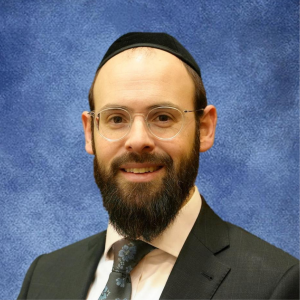 Rabbi Segelman serves as the Rabbinic Director of PUAH USA, where he helps individuals and couples navigate fertility treatment through the lens of halacha and modern medicine.
In 2016, Rabbi Segelman became the Rabbinic Educator at New York Medical College and Touro College of Dental Medicine. In 2021, he moved to Los Angeles, where he currently serves as the Rabbi of Young Israel of Hancock Park.
To sign up for the Kol Echad Limited Series E-Magazine, click here: https://www.ou.org/kolechademail/