

by Yaakov Langer
When Susie Domb was seven months pregnant with her fourth child, her world collapsed in a single, unthinkable moment. Her seven-year-old daughter woke her in the middle of the night, asking for her father, but he wasn’t responding. Within minutes, paramedics arrived, but it was too late. Her husband had died of a sudden aneurysm in his sleep.
Left to raise four children under the age of seven, including a newborn, Susie entered a chapter of life she never imagined. There was no roadmap, no instruction manual—just the day-to-day survival of single motherhood, grief, and the relentless demands of life. “Your life can change in one second,” she says.
But Susie also learned something else: she wasn’t alone.
The Power of Community
In those early days, the support from her Jewish community overwhelmed her. People from every stage of her life showed up to help. They cooked meals, ran errands, took her kids for playdates, and when she couldn’t think straight, they thought for her.
Now, 15 years later, Susie is the one answering the phone. Whenever tragedy strikes, she’s the person people call: What can we do for her? How do we help?
And help, she does. Through the Shine Foundation, Susie has created a dignified, private, and loving space for women navigating some of the darkest chapters of life—most specifically, widowhood and domestic violence.
One Small Start
The idea for Shine came shortly after Susie remarried and moved to Manhattan. Her children were older and more independent, her life was stable again, and she felt the pull to give back. “I just wanted to help widows,” she says. “That’s what I knew. That’s what I had lived.”
She started small. She rented a single room. She spoke with people in the clothing industry and purchased some clothing. She called local shuls asking if they knew any widows who needed support. Then she invited the women to come, take what they needed for themselves and their kids, and talk.
No shame. No judgment. No questions.
Then came the phone call that changed everything. A Jewish organization working with victims of domestic violence asked if they could send women her way.
“I said yes without really knowing what I was saying yes to,” Susie recalls. “But I figured—if I can help another person, why not?”
She quickly discovered what many still don’t know: the frum community is not immune to domestic violence, and the need is immense.
A Safe Space for Dignity
The Shine space looks nothing like a warehouse or donation center. Everything is new. Everything has tags. From shoes to uniforms, coats to toothbrushes, bedding to pajamas, the goal is the same: to make these women and their children feel like everyone else.
They walk in shy and unsure. They ask, “Is this really free?” Susie answers, “Yes. It’s for you.”
They take clothing for themselves and their children, but Susie encourages them to take a little extra. “Take another size,” she tells them. “Give it as a gift. You deserve to give too. It’s not easy to just receive.”
The women never come with their children—a deliberate choice to preserve dignity. And while Susie doesn’t ask questions, many of the women open up anyway. “It’s a safe space,” she says. “They feel it.”
From One Day to Six Days a Week
What began as a once-a-month Sunday project quickly outgrew itself. “Thirty women in one day was too muc h—for them and for me,” she admits. Her husband noticed it was taking a toll. So she expanded.
Today, Shine operates six days a week. Women come by appointment, referred through vetted channels from established Jewish organizations like Met Council, JCC, and OHEL. The one small room expanded to three, and eventually even that wasn’t enough. They now operate out of a new, large, dignified space.
On a typical day, a woman walks in overwhelmed. She sees shoes, clothing, undergarments, school supplies—even Shabbos candlesticks. She walks out with full bags—and often a full heart.
Women return every six months, timed to seasons or milestones: back to school, Yom Tov, summer camp. “Everything from A to Z,” Susie says. “Everything a Jewish woman and her children would need.”
Beyond New York
In just four years, Shine has expanded far beyond its Manhattan roots. After the Russian invasion of Ukraine, they shipped supplies to Jewish orphanages. When wildfires broke out in California, they sent boxes to affected families.
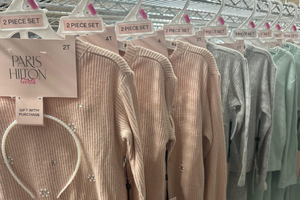
In Israel, Shine works closely with organizations supporting widows of terror victims and fallen soldiers. They send boxes of clothing, essentials, and gifts. They even outfitted a kallah and her mother, who had recently lost her husband, for Sheva Brachot. “The mother was too embarrassed to come and take anything,” Susie laughs. “So we just sent her clothes anyway.”
They also support children directly. One story stands out: a fifth-grade orphan who was bullied for wearing old clothing. Shine sent her new outfits. The next day, every girl in her class wanted to know where she got her shoes. “She had never felt seen before,” Susie says. “It changed everything.”
A Mitzvah of Quiet Strength
Shine doesn’t take walk-ins. Everything runs through referrals. This ensures that everyone is properly vetted, but it also reflects Susie’s philosophy of doing things quietly. There’s no glitz, no spotlight. Even fundraising events are rare. Some brands donate merchandise, but the operation is largely supported by Susie’s husband, Ron, and a few private donors.
Susie has no formal background in social work. She never studied nonprofit management. But what she does have is empathy, drive, and deep emunah. “I remember lying in bed at night and just thanking Hashem for getting me through the day,” she says. “I don’t even know how I did it. It was like I had this superpower.”
She thinks about the women who now sit where she once sat—the widows, the single moms, the
abused. She thinks of the Torah’s warning not to harm the widow or orphan. And she understands it intimately: the loneliness, the feeling of being overwhelmed, the loss of dignity.
“I get it,” she says. “It’s so hard to feel normal after something like that. But I went through it. I came out the other side. And now I get to help others rebuild.” Quietly. Dignified. And with all the love in the world.
Yaakov Langer is the founder of Living L’chaim and the “Inspiration for the Nation,” where he interviews a wide range of Jewish voices around the world. His platform has grown to over 1.6 million subscribers through consistent, thoughtful content and guest selection.
The Shine Foundation works directly with organizations and can be reached at:
Email: info@shine-foundation.com
Phone: (917) 302-9334
Website: www.shine-foundation.com
To sign up for the Kol Echad Limited Series E-Magazine, click here: https://www.ou.org/kolechademail/