
OUDepartment of Public Relations

November 14, 2005

From Yale to UCLA, Ensuring that the Orthodox Community has a Bright Future:
JLIC: Orthodox Communities Flourish on 12 Major Secular Campuses Coast-to-Coast, and South to Florida

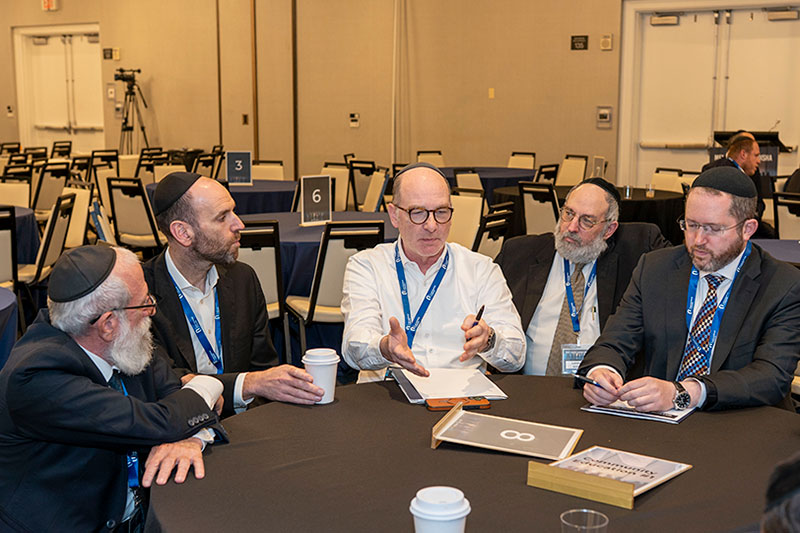
As the fall term of the 2005-2006 school year passes its midterm point, a young Orthodox rabbi and his wife on 12 major college campuses across the country – from New England to California – are dedicated to the enhancement of Orthodox communities (kehilot) on campus, by promoting positive growth and identity among Jewish students. With thousands of observant students currently attending secular universities, the campus environment is therefore serving as one of the incubators for the future of Orthodoxy. The Jewish Learning Initiative on Campus (JLIC) is working to ensure that this future is a bright one, by actively engaging students in Jewish learning, celebration, and one-on-one engagement.

In its sixth year in existence, the Jewish Learning Initiative on Campus) -- a cooperative effort of the Orthodox Union; Hillel: The Foundation for Campus Jewish Life; and the Torah Mitzion organization -- has become a fixture in the Ivy League and by continually adding campuses– three this year alone – has become national in scope and reputation. The 12 campuses taken together have as many Orthodox students as those studying in Jewish-sponsored colleges and universities, according to Rabbi Ilan Haber, JLIC National Director.

This term the University of Florida (perhaps previously better known for its football success than for its success in teaching Torah) has been joined by Rutgers (the State University of New Jersey) and New York University to bring JLIC to an even dozen schools. They follow Yale, Princeton, the University of Pennsylvania, Cornell, Brandeis, Brooklyn College, the University of Maryland, the University of Illinois, and UCLA as JLIC schools. Next year, it is hoped that more campuses will be added.

The program has been given major financial support from an endowment provided by Orthodox Union leaders Herbert (Heshe) Seif and his wife, Harriet, whose names adorn the program.

On each campus, the OU and its partners have provided a rabbinical couple, known as “Torah Educators,” all of whom, of course, are college graduates, many of them from secular colleges, giving them an intimate understanding of what Orthodox and other observant (or learning to be observant) students face on today’s campuses. Beyond this, they are scholars of Judaism, are blessed with excellent communications and teaching skills, and have lifestyles that serve as role models for their students. The couples create a setting in which students can be comfortable in an atmosphere far different from what they experienced in their pre-college yeshiva educations.

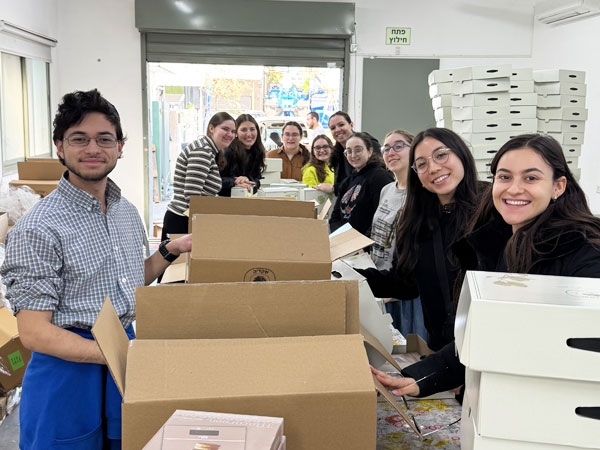
Through the easy availability of Torah study; daily, Shabbat and holiday synagogue services; and kosher food; together with counseling and interaction with their peers, Orthodox students find a welcome niche at the university in which their yeshiva experiences are transferred to the campus, while at the same time they are participating in the academic life of their college. Among other activities, the couples often invite students to their homes for Shabbat and holiday meals. (At Cornell, the JLIC rabbi supervises the kosher kitchen as well.)

“The JLIC program provides a network of outposts for Orthodox students to find safe haven – almost an oasis -- in an environment that has the potential to wear down even the most Orthodox young men and women,” declared OU Executive Vice President Dr. Rabbi Tzvi Hersh Weinreb, a clinical psychologist as well as a rabbi. Referring to secular campuses as “at times a grueling desert” in terms of potential threats to observance of Jewish law, Rabbi Weinreb says that JLIC enables Orthodox students “to have full engagement with the secular world, but with the standards they were raised in and in which they were educated before going to college.”

Non-Orthodox students seeking to broaden their Jewish observance participate as well in JLIC.

The program was the brainchild of Founding Director Rabbi Menachem Schrader, now based in Israel but very familiar with the campus scene in the United States, who recognized that an alternative was necessary for Orthodox students who choose to attend secular colleges – a steadily growing number. He won the support of the three partner organizations, and started the program in the 2000-2001 academic year at Yale and Brandeis. JLIC has expanded to additional campuses every year since.

Now the three new programs at NYU, Rutgers and the University of Florida are hitting their stride. “The educators are building up a following for their students and had many activities during the Jewish holiday period (which took up most of October), having numerous students over for meals and conducting events at their local Hillels,” Rabbi Schrader said, following his recent campus visits on one of his many trips to the United States. “On every campus, positive things are happening.”

A great part of the success of JLIC is owed to the OU/Hillel partnership, declared Rabbi Haber, the JLIC National Director, who with his wife Leah, were the first couple at Yale. “The partnership between the Orthodox Union and Hillel that makes JLIC possible is really quite remarkable,” Rabbi Haber said. “You have two disparate organizations, with different missions and goals, working symbiotically to address a mutual need. Our educator couples are seamlessly integrated as part of the Hillel staff on the campuses that they serve. The collaboration between Hillel and the OU in this regard could serve as a model for how Jewish organizations should work together to advance Klal Yisrael – the Jewish people.”

“JLIC campuses are chosen with great care,” explained Rabbi Moshe Krupka, OU National Executive Director, “with considerable input from their Hillel directors.” He notes that there have been some surprises, that is, campuses with limited numbers of Orthodox students, such as the Universities of Illinois and Florida, but where the Hillel Directors made the case that there was a community to be served: for example, the Champaign-Urbana campus serves many students from Chicago, and the Gainesville campus does likewise for many South Floridians.

Moreover, the University of Florida was chosen, Rabbi Haber explains, “because with an estimated 5,000-6,000 Jewish undergraduate students, that university has one of the largest, if not the largest, Jewish undergraduate populations in the country. Though the Orthodox population there is currently very small, Hillel is engaged in an intensive effort to open up the campus to Orthodox students. We feel that there is an incredible opportunity there for Jewish learning, among both Orthodox and non-Orthodox students, and we have the right couple to meet that potential in Rabbi Yonah and Allison Schiller. Yonah and Allison are very personable, and have eclectic Jewish learning tastes and interests. For example, in addition to being Jewish educators, they are both accomplished artists. They reflect the diversity we look for in our couples, as well as the diversity we look for in our campuses,” Rabbi Haber explained.

Now, with the academic year reaching its midpoint, Rabbis Schrader and Haber are already thinking about next year’s new additions; Hillel directors are vying to lure the program to their institutions. Truly it can be said to Orthodox students around the country: “JLIC is coming to – or is already present – at a campus near you.”

JLIC

* * *

The Orthodox Union, now in its second century of service to the Jewish community of North America and beyond, is a world leader in community and synagogue services, adult education, youth work through NCSY, political action through the IPA, and advocacy for persons with disabilities through Yachad and Our Way. Its kosher supervision label, the , is the world’s most recognized kosher symbol and can be found on over 409,000 products manufactured in 83 countries around the globe.

www.ou.org

Comments? Requests? Questions?

OU Statement to The Press - From the OU Department of Public Relations

Orthodox Union
Department of Communications and Marketing

David Olivestone
Director

Stephen Steiner
Director of Public Relations

Main Office:
11 Broadway, New York, NY 10004
Phone:
212.613.8318 Fax: 212-613-0763
E-mail: steiners@ou.org   media@ou.org

OUPR Archives

Recent statements to the press:

2003  |  2002  |  2001  |  2000  |  1999  |  1998